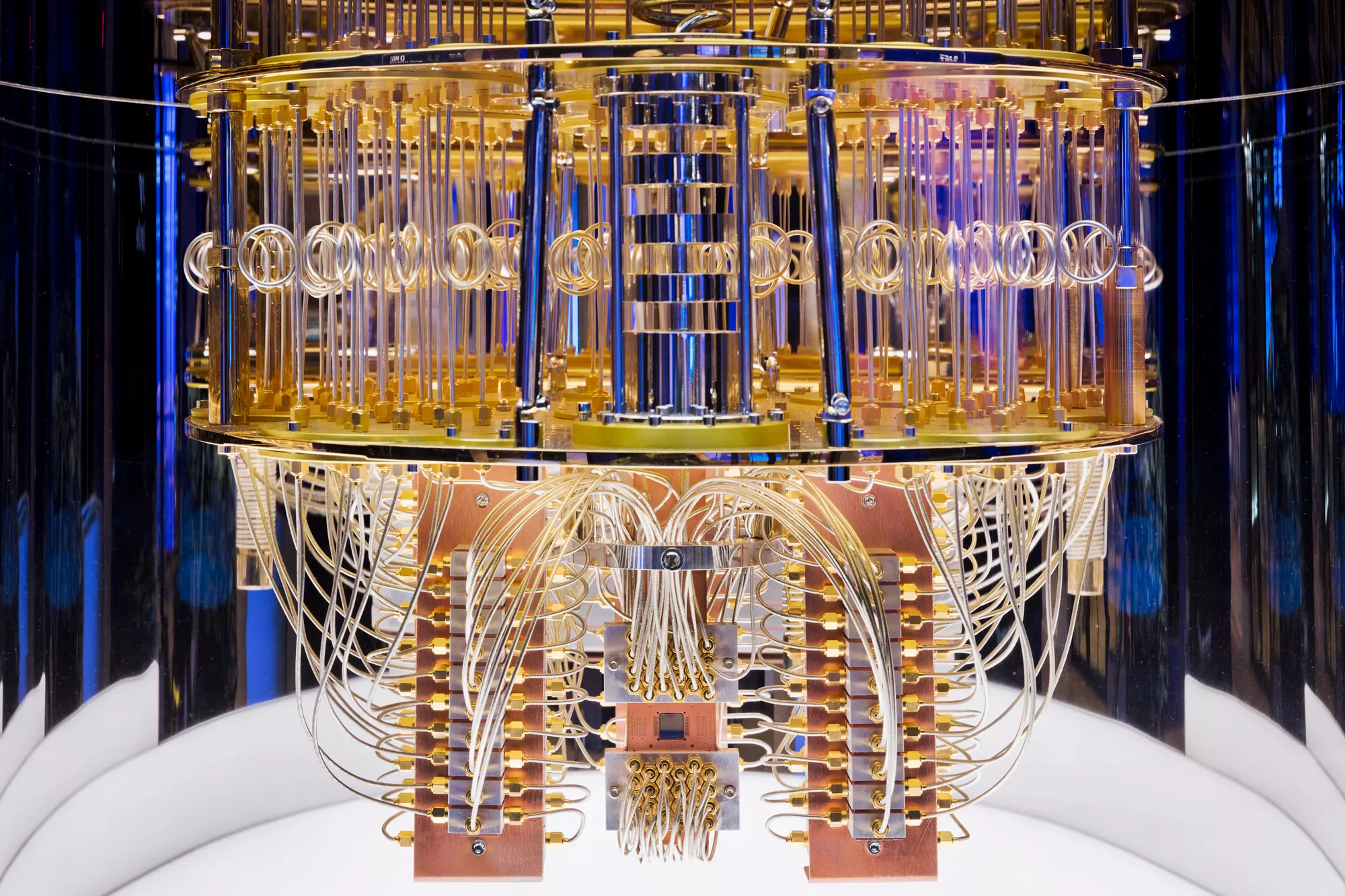
A major breakthrough in quantum computing has brought scientists closer to achieving practical, large-scale quantum systems capable of outperforming classical computers in a wide range of applications. Researchers announced that they have successfully demonstrated a new architecture that significantly reduces error rates, one of the primary obstacles in the field.
Quantum computers operate on principles fundamentally different from traditional machines, using quantum bits, or qubits, that can exist in multiple states simultaneously. This allows them to perform complex calculations at speeds that would be impossible for classical systems. However, maintaining the stability of qubits has proven to be a persistent challenge, as they are highly sensitive to environmental disturbances.
The latest development involves a novel error-correction technique combined with improved hardware design. According to the research team, this approach enables more reliable computations and brings the technology closer to commercial viability. Potential applications include drug discovery, cryptography, optimization problems, and climate modeling.
Industry stakeholders have reacted with cautious optimism. While the breakthrough is significant, experts note that there is still a considerable gap between laboratory success and real-world deployment. Building scalable quantum systems will require substantial investment, as well as continued collaboration between academia and industry.
The implications of quantum computing extend beyond technical advancements. For example, the technology could render current encryption methods obsolete, prompting a shift toward quantum-resistant security protocols. Governments and organizations are already beginning to prepare for this possibility, investing in research to safeguard sensitive information.
Despite the challenges ahead, the progress achieved in recent years has been remarkable. What was once considered a purely theoretical field is now on the brink of practical application. As research continues, the potential for quantum computing to revolutionize multiple industries becomes increasingly tangible.
Leave a Reply